
Pier-and-Beam vs. Slab Foundations: Which Is Better for Your Home?
By Detect and Inspect Home Inspections
A home’s foundation supports everything above it, making it one of the most important structural components of the property. When buyers begin comparing homes, they often encounter two common foundation types: pier-and-beam and slab. Understanding Pier-and-Beam vs. Slab Foundations helps buyers make informed decisions and gives homeowners a better understanding of how to maintain their property.
At Detect and Inspect Home Inspections, we inspect both foundation types regularly. Each offers unique advantages, challenges, and maintenance requirements. Knowing the differences can help you protect your investment for years to come.
What Is a Pier-and-Beam Foundation?
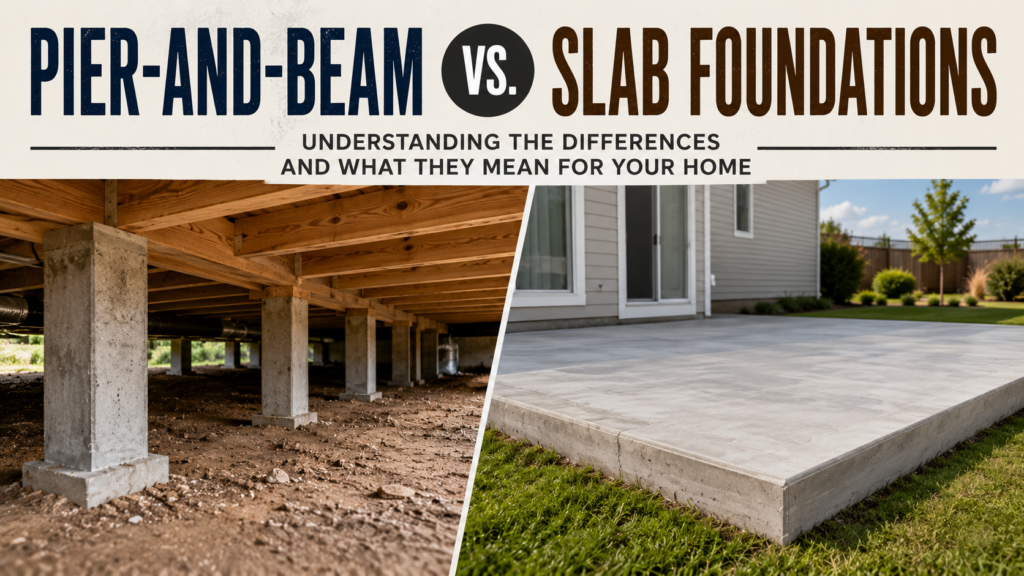
A pier-and-beam foundation raises the home above the ground using concrete piers, wood beams, and floor joists. This design creates a crawl space beneath the home that allows access to plumbing, electrical wiring, and structural components.
Because technicians can access these systems more easily, repairs often require less demolition than homes built on slabs.
However, pier-and-beam foundations require proper ventilation and moisture control. Without regular maintenance, excessive moisture can damage wood framing and encourage mold growth or pest activity.
What Is a Slab Foundation?
A slab foundation consists of a thick concrete pad poured directly on prepared soil. Builders construct the home directly on top of this concrete surface, creating a solid and stable base.
Many newer homes use slab foundations because construction typically moves faster and costs less initially. In addition, slab foundations eliminate crawl spaces, which reduces opportunities for rodents and other pests to enter beneath the home.
Even so, plumbing repairs beneath a slab often require cutting through concrete, making repairs more complicated and expensive.
Comparing Pier-and-Beam vs. Slab Foundations
When evaluating Pier-and-Beam vs. Slab Foundations, homeowners should consider several important factors.
Accessibility
Pier-and-beam foundations provide easy access to plumbing, electrical systems, and structural framing. Contractors can often complete repairs more efficiently because they can work beneath the home.
Slab foundations limit access to these systems. If plumbing develops a leak beneath the slab, repairs may require breaking through concrete.
Moisture Management
Pier-and-beam homes rely on proper crawl space ventilation to control moisture. Poor drainage or inadequate ventilation can create wood rot, mold, and structural deterioration.
Slab foundations avoid crawl space moisture concerns but still require effective grading and drainage around the home. Water collecting near the slab can contribute to foundation movement and cracking.
Foundation Movement
In areas like East Texas, expansive clay soils create challenges for both foundation types. Soil expands during wet weather and contracts during dry conditions.
Pier-and-beam foundations sometimes adjust more gradually because individual piers support the structure.
Slab foundations can develop cracks or uneven settling when soil movement places excessive stress on the concrete.
Repair Costs
Repair costs vary depending on the issue.
Pier-and-beam foundations often allow easier access to damaged components, reducing labor for plumbing or structural repairs.
Conversely, slab foundations may require more invasive work when problems occur beneath the concrete.
Maintenance Matters Regardless of Foundation Type
Neither foundation type eliminates maintenance responsibilities.
Homeowners should:
- Maintain consistent moisture levels around the foundation.
- Keep gutters clean and extend downspouts away from the home.
- Grade landscaping so water flows away from the structure.
- Address plumbing leaks immediately.
- Schedule regular inspections to identify early warning signs.
These simple maintenance habits help extend the life of either foundation system.
How Home Inspections Protect Your Investment
At Detect and Inspect Home Inspections, we evaluate foundations carefully during every inspection. We look for cracks, settlement, moisture intrusion, drainage concerns, floor movement, and structural deficiencies.
Our goal isn’t simply to identify problems. We also help buyers understand what those findings mean for future maintenance and ownership.
Whether a home has a crawl space or sits on a concrete slab, a professional inspection provides valuable information before closing.
Final Thoughts
Choosing between Pier-and-Beam vs. Slab Foundations isn’t about determining which one is universally better. Instead, it’s about understanding how each foundation performs, what maintenance it requires, and how local soil conditions affect long-term performance.
At Detect and Inspect Home Inspections, we help buyers understand the strengths and weaknesses of every home they consider. A thorough inspection gives you the confidence to make informed decisions and protect one of your largest investments.