Why Mixed Pipe Materials Cause Problems
By Detect and Inspect Home Inspections
When buyers think about plumbing, they often assume pipes work the same regardless of material. In reality, plumbing systems tell a more complicated story. One of the most common concerns inspectors encounter involves Mixed Pipe Materials. At Detect and Inspect Home Inspections, we regularly see how combining different plumbing materials creates reliability issues, accelerates wear, and increases repair costs.
What Are Mixed Pipe Materials?
Homes often contain more than one type of plumbing material. Builders may combine copper, galvanized steel, PVC, CPVC, or PEX over time due to renovations, repairs, or partial upgrades. While each material serves a purpose, Mixed Pipe Materials introduce compatibility challenges that homeowners often overlook.
As pipes age at different rates, their performance changes. When dissimilar materials connect directly, chemical reactions and mechanical stress begin to affect the system.
Corrosion Develops Faster at Connection Points
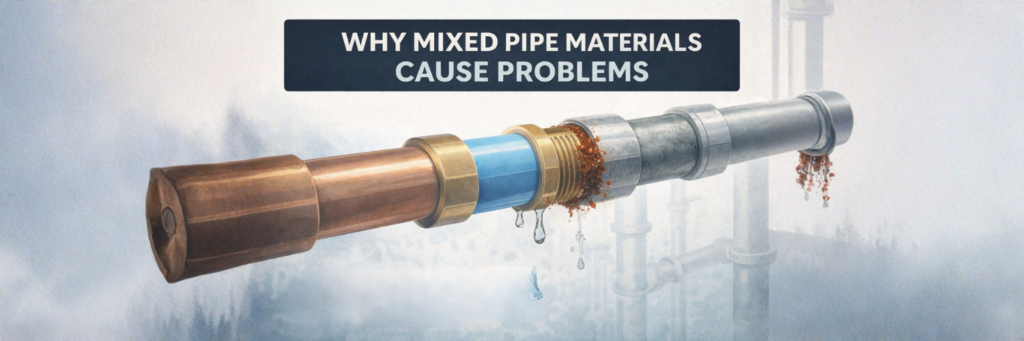
When copper and galvanized steel connect, electrochemical reactions occur. These reactions accelerate corrosion at the joint, restricting water flow and weakening the pipe. Over time, these connections develop leaks that damage walls, flooring, and cabinetry.
Inspectors pay close attention to transition points because problems rarely start in the middle of a pipe. Instead, failures occur where different materials meet.
Water Pressure and Flow Become Inconsistent
Each pipe material carries water differently. Galvanized pipes narrow as corrosion builds, while plastic piping maintains a consistent diameter. When a system combines both, pressure changes throughout the home.
Homeowners often notice weak water flow at fixtures farthest from the supply. During inspections, we test flow and pressure to identify restrictions caused by Mixed Pipe Materials.
Repairs Become More Complicated and Expensive
Once a plumbing system includes multiple materials, repairs require additional fittings, adapters, and labor. Contractors must carefully match materials and avoid improper transitions.
As a result, small plumbing repairs cost more and take longer. Inspectors frequently recommend long-term solutions, such as standardizing pipe materials, to reduce future maintenance issues.
Mixed Materials Increase Leak Risk
Different pipe materials expand and contract at different rates. Temperature changes cause stress at joints, especially in walls and crawl spaces. Over time, seals weaken and leaks develop.
Even minor leaks create serious consequences. Moisture invites mold growth, weakens structural components, and damages finishes. Early detection during a home inspection helps prevent these problems from escalating.
Why Inspectors Flag Mixed Pipe Materials
At Detect and Inspect Home Inspections, we document plumbing materials and highlight transition points. We explain potential risks clearly so buyers understand what they may face after closing.
Although Mixed Pipe Materials don’t always require immediate replacement, they deserve careful monitoring and planning. Knowing the system’s condition allows homeowners to budget and prioritize upgrades effectively.
Final Thoughts
Plumbing systems function best when they remain consistent and compatible. Mixed materials create weak points that shorten system lifespan and increase repair costs.
Detect and Inspect Home Inspections helps buyers and homeowners recognize these risks before they turn into expensive problems. With the right knowledge and a thorough inspection, you can protect your home’s plumbing system and your investment with confidence.