What’s Hiding Under the Sink? Common Plumbing Problems Inspectors Find
By Detect and Inspect Home Inspections
The cabinet under the sink may seem like a simple storage space, but it can reveal important information about a home’s plumbing system. Small leaks, damaged pipes, improper repairs, and hidden moisture can all develop in areas homeowners rarely inspect.
At Detect and Inspect Home Inspections, we frequently uncover Common Plumbing Problems beneath kitchen and bathroom sinks that buyers and homeowners might otherwise overlook.
Slow Leaks Can Cause Significant Damage
First, inspectors look closely for active or previous plumbing leaks. A slow drip from a supply line, shutoff valve, drain connection, or faucet may not seem serious at first.
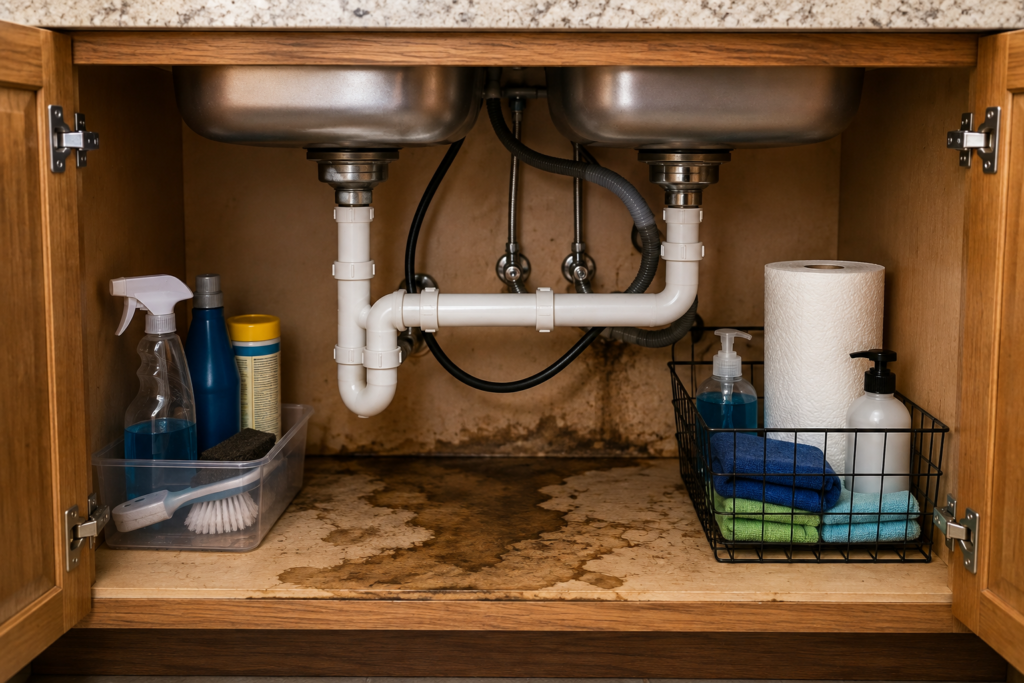
However, even a small leak can damage cabinets, flooring, and surrounding materials over time. Water stains, swollen wood, peeling finishes, and discoloration often provide clues that moisture has been present longer than expected.
Drain Connections May Leak or Be Improperly Installed
Next, inspectors evaluate the drain piping beneath the sink. Loose connections, damaged fittings, improper configurations, and deteriorated components can allow wastewater to escape into the cabinet.
In addition, poorly installed drain components may contribute to slow drainage or recurring leaks. These Common Plumbing Problems can sometimes remain unnoticed until visible damage develops.
Shutoff Valves Can Develop Problems
Shutoff valves allow homeowners to stop the water supply to an individual fixture without shutting off water to the entire home. Because these valves may go untouched for years, they can become corroded, damaged, or difficult to operate.
Inspectors may also notice signs of leakage around the valve or supply-line connection. Catching these concerns early can help prevent a small plumbing issue from becoming a much larger problem.
Hidden Moisture Can Lead to Bigger Concerns
Moisture beneath a sink does not always create an obvious puddle. Sometimes the evidence appears as staining, warped cabinet materials, deterioration, or musty odors.
When moisture remains present for extended periods, it can create conditions that encourage microbial growth and material damage. For this reason, inspectors pay close attention to signs that suggest an ongoing or previous moisture problem.
DIY Plumbing Repairs Can Create Trouble
Homeowners sometimes attempt plumbing repairs themselves. While some repairs may work properly, others involve incorrect fittings, makeshift connections, excessive sealants, or components that were never designed for the application.
During an inspection, unusual modifications can provide important clues about previous plumbing work. Improper repairs are among the Common Plumbing Problems inspectors identify because they may lead to leaks, drainage issues, or future repairs.
Garbage Disposals Can Reveal Additional Issues
Kitchen sinks with garbage disposals require additional attention. Inspectors may find leaks around the disposal, loose connections, corrosion, damaged components, or improper installation.
In addition, plumbing connections around the disposal and dishwasher can sometimes contribute to drainage or leakage concerns. Evaluating the entire area helps provide a clearer picture of the sink’s overall condition.
Cabinet Damage Can Reveal a History of Leaks
Finally, the cabinet itself can tell an important story. Stains, sagging shelves, swollen particleboard, peeling surfaces, and previous patches may indicate that plumbing problems occurred in the past.
Even when the plumbing appears dry during the inspection, these signs can reveal a history of leakage. Inspectors look beyond the pipes to determine whether surrounding materials show evidence of previous problems.
Small Plumbing Problems Can Become Expensive Repairs
Plumbing leaks rarely improve on their own. What begins as a small drip can eventually damage cabinetry, flooring, walls, and other nearby materials.
Addressing Common Plumbing Problems early can help homeowners protect their property and avoid unnecessary repairs. For buyers, identifying these issues before closing provides a better understanding of the home’s current condition and potential maintenance needs.
Final Thoughts
There is often more hiding beneath a sink than cleaning supplies and trash bags. Leaks, improper repairs, damaged valves, and moisture-related deterioration can provide valuable information about a home’s plumbing system.
At Detect and Inspect Home Inspections, we carefully evaluate accessible plumbing components to identify Common Plumbing Problems that may otherwise go unnoticed. A thorough home inspection can help buyers understand what is happening beneath the surface and make more informed decisions about their future home.