
Bathroom Exhaust Fans Venting Into the Attic: Why It Matters
By Detect and Inspect Home Inspections
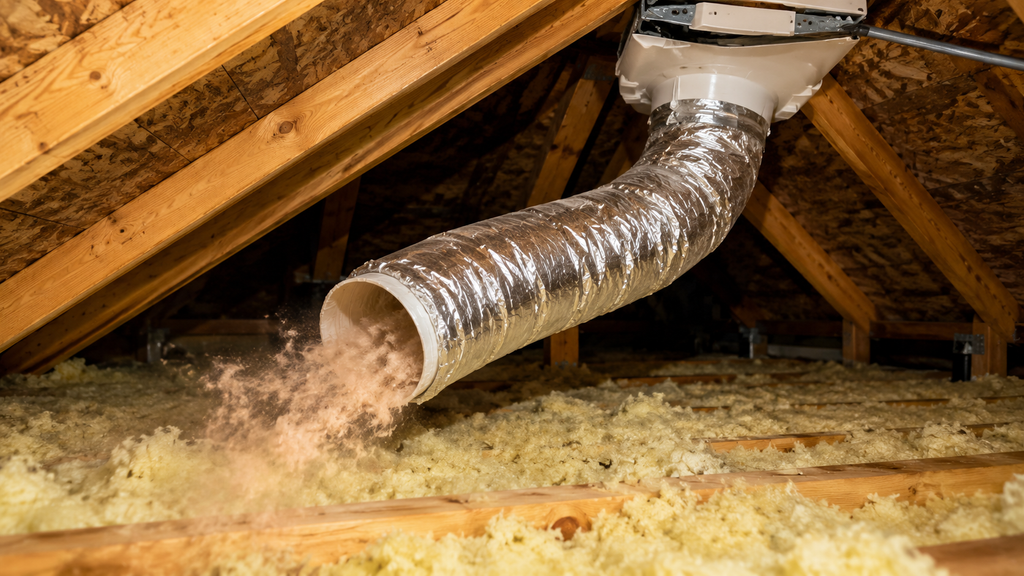
Bathroom exhaust fans have a simple job: remove warm, moisture-filled air from the bathroom and send it outside the home. During inspections, however, we sometimes find a Bathroom Exhaust Fan Venting Into the Attic instead.
It may seem like a small installation issue, but repeatedly releasing humid air into an attic can create conditions that affect insulation, roof sheathing, framing, and other materials. At Detect and Inspect Home Inspections, this is exactly the type of detail we look for when inspecting attic spaces.
Where Should a Bathroom Exhaust Fan Vent?
First, a bathroom exhaust fan should move moisture out of the home rather than simply relocating it to another area.
The exhaust duct should terminate at an appropriate exterior location. When a Bathroom Exhaust Fan Vents Into the Attic, the moisture removed from the bathroom is released directly into an enclosed space where it may collect on cooler surfaces.
Bathroom Air Carries a Lot of Moisture
Every hot shower adds moisture to the air. The exhaust fan helps control that humidity by pulling damp air away from the bathroom.
However, if the duct ends inside the attic, that moisture has not actually left the house. Instead, warm, humid air enters an area filled with wood framing, insulation, roof decking, and other materials that can be affected by repeated moisture exposure.
Moisture Can Condense on Attic Surfaces
Next, temperature differences can make the problem more noticeable. Warm bathroom exhaust entering a cooler attic can condense when it contacts colder surfaces.
Over time, inspectors may find staining, damp materials, or other signs of elevated moisture near an improperly terminated exhaust duct. The extent of the issue can vary depending on how often the fan is used, attic ventilation, weather conditions, and how long the condition has existed.
Roof Sheathing and Framing Can Be Affected
Wood components in an attic are designed to remain relatively dry. Repeated moisture exposure can contribute to staining and deterioration and may create conditions that support microbial growth.
This does not mean every improperly vented bathroom fan has already caused significant damage. However, finding a Bathroom Exhaust Fan Venting Into the Attic gives an inspector a reason to look carefully at the surrounding materials for evidence of moisture-related concerns.
Insulation Can Also Be Exposed to Moisture
Attic insulation is another area inspectors evaluate around exhaust ducts. If moisture repeatedly enters the attic, nearby insulation may become damp or show signs of previous exposure.
Wet or compressed insulation may not perform as intended. Inspectors look at both the exhaust termination and surrounding attic conditions to understand whether the improper installation appears to be affecting other components.
The Ductwork Matters Too
The location where the exhaust terminates is not the only part of the system worth inspecting. The duct itself can also reveal problems.
Disconnected sections, damaged ducts, excessive sagging, poor routing, or loose connections can prevent bathroom air from reaching the intended exterior termination. Even if an exterior vent is present, disconnected ductwork inside the attic can still release moisture before it gets there.
It Can Be Easy to Miss From Inside the Bathroom
From inside the bathroom, the exhaust fan may sound and appear to work normally. Air moves through the grille, the fan runs, and there may be no obvious indication of a problem.
The issue often becomes apparent only after entering the attic and following the duct. This is one reason attic access is an important part of a home inspection when the space is safely accessible.
Correcting the Problem Helps Move Moisture Outside
If a bathroom exhaust fan terminates in the attic, correction typically involves properly routing the exhaust to an appropriate exterior termination.
The exact correction depends on the home’s construction and existing ventilation setup. A qualified professional can determine the appropriate routing and installation for the property while also evaluating any materials that may have been affected by moisture.
Small Details Can Reveal Bigger Concerns
A bathroom exhaust duct may not seem like a major component of a home, but its installation can affect much more than the bathroom itself.
Finding a Bathroom Exhaust Fan Venting Into the Attic is a good example of why an inspection goes beyond checking whether something simply turns on. Where the air goes after the fan starts matters just as much.
Final Thoughts
A working bathroom exhaust fan should remove moisture from the home — not send it into the attic. When humid bathroom air repeatedly enters an attic, it can contribute to moisture accumulation and affect insulation, roof sheathing, framing, and other nearby materials.
At Detect and Inspect Home Inspections, we inspect accessible attic spaces and visible exhaust ductwork to help identify conditions buyers may never see during a typical walkthrough.
Buying a home in East Texas? Schedule your home inspection with Detect and Inspect Home Inspections before you close. We’ll look beyond what simply turns on and help you understand how the home’s systems are actually working.