How Improper Storage Damages Structural Areas
By Detect and Inspect Home Inspections
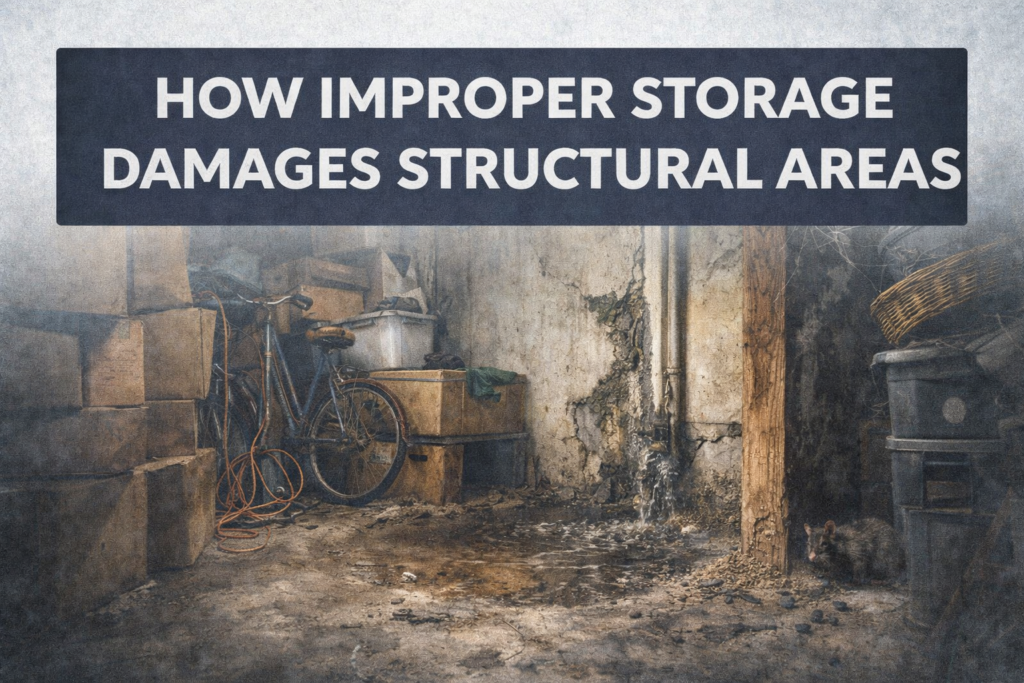
Homeowners often use garages, attics, basements, and crawl spaces for storage. While that seems convenient, poor storage habits can lead to serious structural problems over time. In fact, Improper Storage Damage ranks as one of the most overlooked risks during a home inspection. At Detect and Inspect Home Inspections, we regularly find how stored items impact the safety, stability, and longevity of a home.
Heavy Loads Put Stress on Structural Components
First, weight matters. Many homeowners stack heavy boxes, furniture, or equipment in areas not designed to carry that load. Attics, for example, often support only light storage. When homeowners overload them, ceiling joists begin to sag and weaken.
Over time, this stress leads to cracks in drywall, uneven ceilings, and even structural failure. Because of this, inspectors always evaluate load-bearing areas for signs of strain caused by improper use.
Blocked Ventilation Leads to Moisture Problems
Next, storage can restrict airflow. When items crowd attics, basements, or crawl spaces, they block ventilation pathways. Without proper airflow, moisture builds up quickly.
That trapped moisture creates the perfect environment for mold growth and wood deterioration. As a result, Improper Storage Damage often starts with something as simple as stacking boxes too tightly against walls or vents.
Stored Items Hide Critical Issues
In addition, excessive storage can conceal important structural concerns. When boxes, shelving, or personal items cover walls and floors, inspectors lose visibility.
Hidden leaks, cracks, pest activity, and foundation issues can go unnoticed for long periods. By the time someone discovers the problem, the damage often requires costly repairs. Clear access allows inspectors to identify issues early and provide accurate findings.
Moisture and Material Contact Cause Deterioration
Storage placement also matters. When items sit directly against walls or floors, they trap moisture between surfaces. Cardboard boxes, fabric materials, and wood furniture absorb that moisture and transfer it to structural components.
This contact accelerates deterioration. Wood framing begins to weaken, and finishes break down faster. Over time, Improper Storage Damage spreads beyond the stored items and affects the home itself.
Pest Activity Increases in Cluttered Areas
Cluttered storage areas attract pests. Rodents, insects, and other pests seek out dark, undisturbed spaces. Stacked items provide perfect shelter and nesting opportunities.
Once pests settle in, they damage insulation, chew wiring, and weaken structural materials. During inspections, we often find signs of pest activity hidden within poorly organized storage areas.
Safe Storage Practices Protect Your Home
Fortunately, homeowners can reduce risk with better storage habits. Keep weight within recommended limits, especially in attics. Maintain clear pathways for airflow and inspection access. Store items off the ground and away from walls to prevent moisture buildup.
Additionally, organize storage areas so you can easily monitor conditions over time. These small adjustments help prevent long-term structural issues.
Final Thoughts
Improper storage doesn’t just create clutter — it creates risk. Excess weight, blocked airflow, hidden damage, and moisture buildup all contribute to structural problems that grow over time.
At Detect and Inspect Home Inspections, we look beyond the surface to identify how storage habits impact your home. By understanding the risks of Improper Storage Damage, homeowners can make simple changes that protect their investment and prevent costly repairs.